


Helping New Scientists Thrive at Suffolk
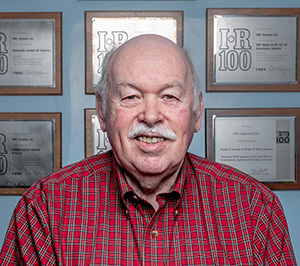 By fourth grade, Jack Driscoll, BS ’65, HDCS ’93 realized that he was good at math; by tenth grade, he fell in love with chemistry. As a Suffolk undergrad, he was able to build on these passions, which led to a high impact career. Now, Driscoll and his wife, Joan (who taught English at Suffolk for a decade), are boosting the University’s science program through a generous gift. Their new scholarship fund will support juniors and seniors with demonstrated financial need who are majoring in chemistry, biochemistry, or environmental science or minoring in physics. “Our scholarship fund,” Driscoll says, “makes it easier for Suffolk students to afford their education. Joan and I want these awards to make a real difference to students. Our gift is the best way we know to make that happen.”
A Rigorous Education
Driscoll is no stranger to the financial pressures of higher education. While at Suffolk, he’d work a ten-hour Sunday shift at a restaurant and then dive into coursework until 3 a.m. Science courses were, of course, central to his major in chemistry and minor in math and physics. But Driscoll was also grateful that his English professor, Edward Clark, pushed the class hard to master the art of writing. Later, when Driscoll’s employers asked him to draft reports and proposals, this skill proved essential.
Driscoll came to Suffolk University as a transfer student. Prior to Suffolk, he attended Franklin Cummings Tech in Boston (formerly the Benjamin Franklin Institute of Technology), majoring in chemical engineering. After graduating from Suffolk, he attended Boston University, earning a master’s degree in physical and inorganic chemistry.
A Steeply Rising Career Path
Early in his career, Driscoll worked for the Geophysics Corporation of America in Bedford, Massachusetts. He wrote the chemistry section of a major proposal which spurred the beginning of his environmental career. Driscoll also worked in the applied physics lab on a NASA-sponsored “Photoionization Mass Spectrometer for Space Cabin Atmospheres” project. Through these two projects, Driscoll acquired the background he needed to later start his own company.
At his next job at Walden Research in Cambridge, he worked with continuous monitoring instrumentation technology that measured a wide range of contaminants. His funding proposals to the Environmental Protection Agency and National Institute for Occupational Safety & Health were approved at an extraordinary 75% rate. He also gained management experience by supervising a group of 12 scientists.
After working at Walden Research for more than four years, Driscoll recognized the great potential for photoionization in the environmental monitoring field. In a career-defining move, Driscoll launched his own company, HNU Systems in Newton in 1973. There he invented the world’s first handheld photoionization detector (PID), weighing just 12 pounds, to measure hazardous volatile organic compounds. Among his innovations were using a sealed vacuum UV lamp instead of previous glow discharges and running the ionization chamber at atmospheric pressure rather than a vacuum to improve sensitivity. This technology was soon in great demand by the industrial hygiene field, since federal standards for interior air pollution were severely tightening. Driscoll’s invention met the moment because it was 50 times more sensitive than previous counterparts. This and related products by HNU were adopted by major companies and also put to use in environmental disaster zones like Love Canal, New York and then globally. Ultimately, Driscoll’s company sold more than 50,000 units.
HNU Systems morphed into PID Analyzers, located in Sandwich, which continues as a powerhouse led by Driscoll. It’s truly a family venture with his business partner daughter, Jennifer MacLachlan, and her two daughters who are also employed there. In the coming months, the company will introduce 35 new products. During his tenure as CEO, Driscoll consulted with the Environmental Protection Agency and was invited by the White House to provide input on international trade and technology issues.
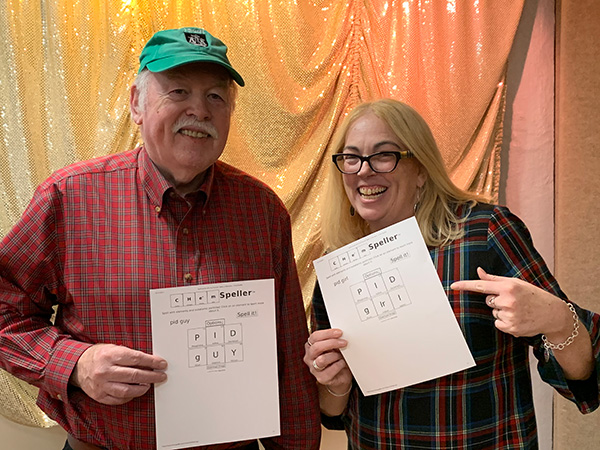
Jack Driscoll and his PID Analyzers business partner and daughter, Jennifer MacLachlan
Driscoll’s dynamism is further demonstrated by other biomedical enterprises that he helped to found and direct, all while leading PID Analyzers. He also assisted the Indonesian National Police with their introduction of chemical detection devices.
Industrial workers have benefited tremendously from Driscoll’s innovations, leading to him receiving the Edward J. Baier Award in 2017, in recognition of his groundbreaking work in developing and commercializing photoionization technology for industrial hygienists. The American Chemical Society (ACS) inducted him as a Fellow, an honor accorded to fewer than one percent of their 155,000 members; and Driscoll has received ACS national, regional, and local awards for entrepreneurship, science education & outreach, and professional service, respectively.
As a renowned authority in his field, Driscoll has authored more than 80 articles on photoionization, received more than 40 US and foreign patents, and given more than a thousand lectures. In fact, Driscoll’s book, Flue Gas Monitoring Techniques, sold 3,000 copies and helped finance his company’s first production run of the PID some 50 years ago.
Giving Back Abundantly
Driscoll’s vigor as an inventor and entrepreneur is matched by his extensive volunteerism. A founder of the Environmental Business Council of New England, he later served as its president and chairman. For seven years, Driscoll was on the board of the Cape Cod and Islands Council for Scouting America, where his daughter, Jennifer, continues to serve in that role. Father and daughter also have partnered on science, technology, engineering, and mathematics activities for public schools and education groups in southeastern Massachusetts and on the Cape.
Over the years, Driscoll’s ties to Suffolk have flourished, as well. For more than three decades, Driscoll collaborated with Professor Emeritus Walter H. Johnson, former chairman of the Physics Department, on projects that engaged students in chemistry and physics. In addition, he served on the College of Arts & Sciences Dean’s Advisory Board, the Engineering Advisory Board, and the Chemistry-Business Advisory Board. Suffolk awarded him an honorary Doctor of Commercial Science in 1993, as well as alumni awards in 1995 and 1996.
The new scholarship fund created by Driscoll and his wife addresses their belief that “It’s vital for our society to produce more scientists—the need is not going away.” This idea is amplified by Melanie Berkmen, Professor, and Associate Dean of Experiential Learning, Innovation, and Partnerships, who remarks that “this scholarship reflects Dr. Driscoll perfectly—someone who built a career making chemistry matter in the real world and is now investing in science students who want to do the same.”