


A 40-year donor to Suffolk reflects on his career as an Internet pioneer
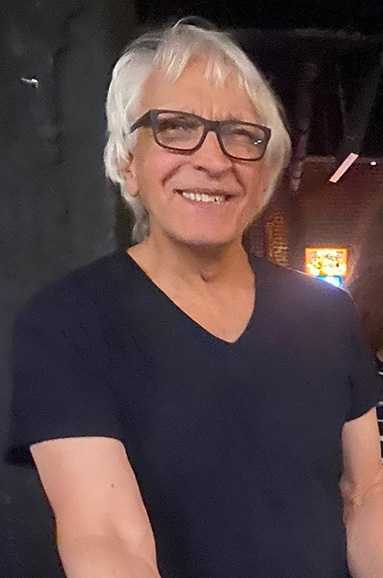 When Tony Magliero, B.S. ’75 in Psychology, looks back on his 30-year career in the industry that spawned Internet commerce and artificial intelligence, he credits Suffolk University for spurring essential traits in him like curiosity and adaptability. Along with this gratitude comes his commitment to giving back to his alma mater.
Tony was born in Boston and raised in Revere, MA. His grandparents were immigrants who came through Ellis Island in the early 1920s. He was the first generation in his family to earn a college degree.
The path to Tony’s Suffolk degree began with unfulfilling stints at other universities. Once he arrived at Suffolk in 1973, he knew that he’d found the right place. Suffolk, at the time, was a commuter school based in a few buildings on Temple Street. Many of his fellow students were also first-generation and, like Tony, upwardly mobile and hard working. To help pay for school, Tony worked part-time at a Boston Public Library branch across the street from the University.
Meaningful connections with faculty were the key to Tony’s transformative experience at Suffolk. He found that his Suffolk classes “didn’t necessarily end at the appointed time; they continued in hallways and faculty offices. We never felt like there was a limit in how much time we could spend with faculty.” Such interactions helped to restore Tony’s academic confidence. “The faculty,” he comments, “also shared how they dealt with a wide range of life circumstances. This taught me a lot about how I, too, could be adaptable in school and professional situations.”
In particular, Tony developed a friendship with Professor Emeritus of Psychology Robert Webb, whose classroom style and informal interaction with students Tony found appealing. Professor Webb motivated Tony to think practically about a career as a research psychologist. Another source of inspiration for Tony was the late Professor Malcolm Wetherbee, chair of the Psychology Department. Professor Wetherbee championed diversity at Suffolk, evident in his hiring of African-Americans and women in the department. Tony remarks that Professor Wetherbee was “ahead of his time in ways that I didn’t realize until years later.”
After graduating from Suffolk, Tony earned his Ph.D. in Psychology at the University of Texas, Arlington, with a focus on memory, cognition, and problem-solving. The skills that Tony acquired at Suffolk gave him an edge in graduate school: “All those conversations I had with Suffolk faculty provided me with an in-depth understanding of psychology that far exceeded any of my fellow students.”
Although Tony had aimed for a career as a research psychologist, life presented unexpected options. In 1984, a University of Maryland spinoff, Software Architecture and Engineering in Arlington, VA, wanted to hire a “knowledge engineer” – someone who understood computers in association with human problem-solving. Tony’s training fit the bill and he was hired. Demonstrating adaptability, Tony learned graduate-degree level computer programing on the job. The company’s ambitions, however, were thwarted by that era’s lack of affordable high-level computing power. As Tony recalls, “We were trying to find shortcuts that humans use in solving problems—but we lacked the computational power needed to deal with all the complexities.”
In 1995, Tony was hired by an IBM unit in Falls Church, VA and stayed there 11 years. He and his colleagues were tasked with shifting the company from the mainframe world into the Internet. Practically, his work focused on the frontier of Internet search and commerce, at a time when few people had any notions of what the Internet could be. His group developed one of the earliest practical search engines. You could find information, such as how to organize financial data or technical specifications of your car—and then buy it online. Now we take for granted such transactions, but the people who made it possible, like Tony, had to bring tremendous creativity and know-how to the task. These innovations were “radical for the time,” Tony comments, “but the world wasn’t quite ready for them.” The road opened by Tony and his colleagues was part of a tech revolution that subsequently led to the society-altering platforms launched by companies like Google and Amazon.
Tony looks back with pride on his role in computer tech: “The things we were working on were very exciting. We all had a rosy, pie-in-the-sky picture of what was going to happen with this technology—though most of it eventually came true. It was a little bit of a wild west.”
Throughout his work life and post-retirement, Tony has stayed strongly connected to Suffolk. He was delighted to serve as Marshall for the College of Arts & Sciences during the spring 2026 commencement: “I will treasure the memory of it forever. I could see and feel the bonds among all members of the Suffolk community—students, faculty, staff, and trustees. There were no barriers separating people.”
Another facet of Tony’s connection to Suffolk is his consistent generosity; he has donated to the University for more than 40 consecutive years. In recent years, Tony has increased his support, entitling him to join the University’s Summa Society at the Gleason Archer Circle level. “I want to help,” he remarks, “in any way that I can.”
Tony continues to be grateful for his Suffolk education; without it, he says, “my life would have been a lot less interesting. At Suffolk, I developed the intellectual versatility that allowed me to work on the cutting edge of an incredible new field.”