

Where Logic Meets Performance

From rap parallels to civic impact, Professor Frank Irizarry shows how debate shapes sharper thinkers—and stronger citizens
Francisca Baduya and Professor Frank Irizarry at the Studio 73 interview desk
 Student reporter Francisca Baduya, Class of 2028, and Professor Frank Irizarry

Nearly four decades ago, sidelined by a fractured arm, college football player Frank Irizarry needed a competitive outlet. He found a way to spar with top opponents when he joined his college policy debate team—and developed a lifelong passion for the activity’s unique mix of preparation and performance.  

Now Irizarry, a professor in Suffolk’s Department of Advertising, Public Relations & Social Media, serves as a judge, coach, and mentor to students at various levels of the craft, from middle and high schoolers in the Boston Debate League, to the college policy team he re-established at Suffolk in fall of 2022.  

This year, Suffolk’s team cracked the Cross Examination Debate Association’s national Top 30 rankings, reaching #23 this spring and finishing ahead of teams at schools including Harvard College, Cornell, and Dartmouth College.  

In a conversation with honors broadcast journalism student Francisca Baduya, Class of 2028, for the student-led YouTube series “The On-Ramp,” Irizarry shared what excites him about debate, and why democracy might function better if everyone learned its principles.  

“We focus on logic and reasoning and supporting evidence, and understanding the structure of arguments,” explains Irizarry. “I think that makes people more informed citizens.” 

Learn more, including what debate has in common with rap and hip hop, on “The On-Ramp”: 
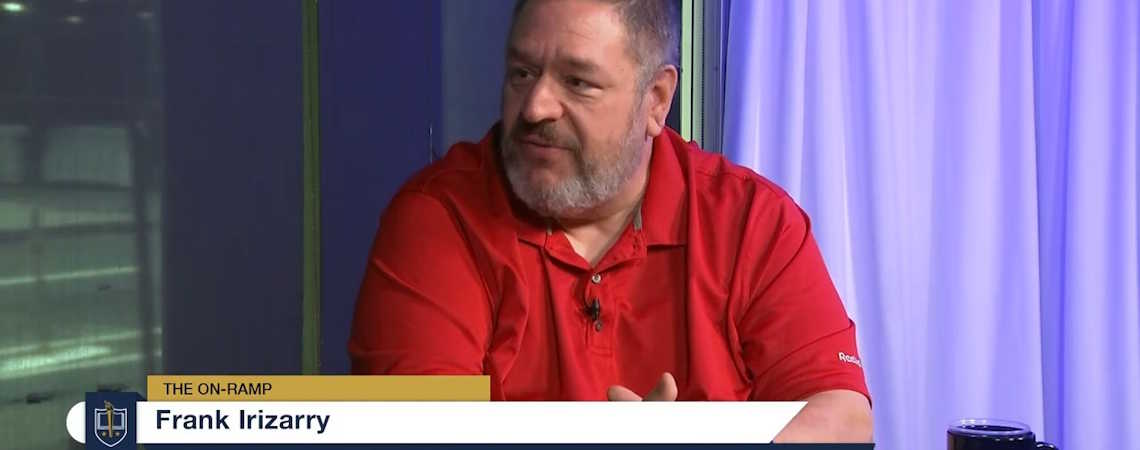
Still image of Frank Irizarry from The On-Ramp YouTube video with his name captioned below

"The On-Ramp"

Transcript Search in video 0:00 (pleasant intro music) 0:03 - When debaters step up to the podium, what determines 0:06 who wins and who loses? 0:08 Is it just optics, tone and sound bites, 0:11 or do facts still matter? 0:13 Here at Suffolk University, debate isn't just a winner 0:16 takes all free for all. 0:18 It's helping students find and amplify their voices. 0:22 Hello and welcome to "The On-Ramp," an ongoing series 0:25 that highlights thought leadership from Suffolk University 0:28 in downtown Boston. 0:30 My name is Francisca Baduya, 0:32 and today I'll be speaking with Professor Frank Irizarry, 0:36 he's a senior instructor in the advertising, 0:39 public relations and social media program 0:42 who lives, breathes, teaches, and coaches debate. 0:46 Professor Irizarry, I thank you so much for being here 0:48 and welcome to the show. 0:50 - Thank you for having me. - Of course. 0:52 So, you are a debate coach, debate judge, 0:56 a former college debate champ, 0:58 and you even teach courses on debate here at Suffolk. 1:02 What first drew you to debate and what's kept you hooked? 1:06 - That's a great question. 1:07 When I was in, when I started college, 1:09 I played football my first year in college, 1:11 and I'd been, at the start of my sophomore year, 1:14 I broke my arm and I had a fairly serious arm injury 1:17 and I was actually thinking about dropping out 1:19 of school altogether just to kind of clear my mind 1:22 and get myself together, figure out 1:24 what I want my next move to be. 1:26 And as I had finished packing up my dorm 1:30 and I ran into the debate coach at my school. 1:32 And I had taken a class with him my freshman year, 1:34 and he had told me, he's like, "You should come out, 1:36 like you have some aptitude towards this." 1:38 And I saw him on campus and he asked me how I was doing. 1:41 He had heard that I had hurt my arm. 1:42 He asked me what my plan was. 1:43 I told him I was thinking of leaving school 1:45 and taking a leave, and he said, "You know, you should come 1:48 and join the debate team." 1:50 He's like, "When I was in college, I actually hurt myself. 1:52 And that's how I got involved in debate 1:54 because I needed a competitive outlet." 1:56 And so debate proved to be 1:58 that competitive outlet when football was no longer 2:00 a competitive outlet for me. 2:02 And that's what probably first drew me to debate. 2:04 - Wow. Well, I'm so sorry to hear that. 2:06 I'm really glad that from there- 2:08 - But it's all worked out. 2:09 - Yeah, I mean obviously now it's worked out, 2:11 but for you debating is about much more than simply people 2:15 taking a side and opposing each other. 2:18 Why is that? 2:19 - I think because of what debate represented for me 2:22 when I was in college, when I was 19, 2:25 and I joined my college debate team, that it was a lot 2:28 of my motivation to stay in school was because of debate. 2:30 And then I was also, I was a political science major, 2:33 so I always had a passion for politics. 2:36 And so I just saw a debate as a natural extension 2:39 of that interest. 2:41 And then now seeing the skills that debate teaches you, 2:45 I enjoy that opportunity to try to instill those same skills 2:49 and teach those same skills to my students. 2:52 - Of course, are there any principles 2:54 that people can take from debate 2:56 and apply it to how they analyze complex topics? 3:00 - Absolutely. 3:01 The first thing I tell my debaters is 3:03 you've watched presidential debates 3:05 and political debates on television. 3:07 We are not that. 3:09 That's not what we do. 3:11 So we focus on logic and reasoning and supporting evidence 3:15 and understanding the structure of arguments. 3:19 And I think that that makes people better informed citizens. 3:23 I think that makes democracy able to function. 3:26 And the skills that I've used in debate, I've used 3:29 in all sorts of facets of my life. 3:31 You know, negotiating when buying a house, 3:33 the skills that you develop, learning how to argue 3:36 and bargain also helps you in a lot of, 3:39 they're truly portable skills. 3:40 - Of course, so you work with high school debaters 3:43 through the Boston Debate League. 3:45 and teach a dual enrollment class here at Suffolk. 3:49 How does participating in debate impact 3:51 young people's futures? 3:53 - I've noticed, because we've been teaching the class 3:55 for I think, nine years now, 3:57 that a lot of our students are very active and involved, 4:01 not just in their communities, 4:03 but in Greater Boston. 4:04 There's a high school leadership council 4:07 that works for Mayor Wu, 4:09 and there's been a member of the Boston Debate League 4:12 on that council almost every year that I've been teaching- 4:14 - Wow. - The class. 4:15 So they're very active 4:16 and engaged and they wanna prepare. 4:18 And so when they take the class as high school students, 4:21 it's really preparing them for a higher level 4:23 of civic and community engagement 4:26 not just in their communities, but in their high schools 4:28 and when they go off to college. 4:30 So a lot of them, I think it prepares them 4:32 for those leadership positions. 4:34 - Speaking of college, actually three years ago, 4:37 you reestablished Suffolk College Policy Debate team. 4:41 - Yes. - Why is it so important 4:43 for students to have the opportunity now 4:45 in higher education as well? 4:48 - I think oftentimes students come to us 4:51 from secondary programs, where so much of 4:54 what they're doing in high school now is they learn 4:56 how to memorize, they learn how to take tests, 4:59 but the ability to critically think, the ability 5:03 to be an advocate, the ability to use logic and reason, 5:07 I think a lot of school, a lot of students 5:08 come into school with that 5:11 as almost a skill deficiency, 5:12 and debate gives them the opportunity 5:14 to really develop that skill. 5:17 - So something fascinating I found you really do is 5:21 you bring your colleagues teams 5:23 into correctional facilities. 5:25 - Yes. - To debate against 5:26 incarcerated people as a part 5:28 of the National Prison Debate League program 5:32 which you also coach. - Yes. 5:34 - What has that been like 5:36 for your students to have that hands-on experience? 5:39 - I thank you for asking. 5:40 It's been a really transformative 5:42 experience for the students. 5:43 I've spent the last three years now 5:46 coaching the main, 5:47 I coached the main correctional center team. 5:49 I coached the men's team for a year. 5:51 I coached the women's team for a year, 5:52 and now I'm coaching Cheshire Prison in Connecticut, 5:56 so I'm moving to Connecticut, so wherever they need me. 5:59 But it's one of those things I just kind of got sucked into. 6:02 I was asked to judge a debate 6:04 between the Maine Correctional Center 6:06 and Boston College a few years ago and loved the experience. 6:11 And then I said, "Well, how could I get involved?" 6:13 And they said, "Well, we're glad you asked." 6:14 So I've been coaching, 6:15 and then I brought the Suffolk team up 6:17 and it really is, it's a powerful experience 6:20 for them to walk into the facility. 6:23 And I've had debaters now 6:25 that have already done it twice, 6:26 but last time we went, there were some debaters 6:29 that were going for the first time 6:30 and the look on their faces when they were walking 6:33 into the main correctional center. 6:34 And that door closes and locks shut behind you. 6:38 And then you walk into the room, which is 6:41 like a larger assembly room, 6:43 and you meet the residents of the facility, 6:47 that you're gonna be competing against. 6:49 And the thing that I like most is, 6:52 the debates have always been fantastic, 6:55 but it's after the debates when we could sit down 6:57 and have a meal. 6:57 And I noticed the debaters aren't just sitting 7:00 amongst themselves that they're mixing 7:02 and mingling with the prisoners 7:05 and getting to know a little bit about their lives 7:08 and hearing their stories and things like that. 7:10 So it really is a transformative experience. 7:13 I could tell you, coming back from Maine, 7:16 like usually when we're coming back from debate 7:17 competitions, it's dead silent. 7:19 You would never imagine a handful of debaters 7:22 would just be quiet. 7:23 - It's quiet. 7:24 - But when we're coming back from Maine, 7:25 they all they wanna do is talk about the experience. 7:27 So you could always tell 7:28 that something has had an impact on 18 to 22-year-old 7:31 college students because they just want to talk about it. 7:33 And so I think that that's really neat. 7:35 - No, that sounds wonderful. 7:37 It sounds like a great opportunity for students, 7:39 but how has it impacted the incarcerated debaters as well? 7:44 - I think it's important for them, like the motto 7:47 of the National Prison Debate League is decarcerating minds. 7:50 And so I think oftentimes when they see college students 7:54 that are willing to give up their time to come travel 7:57 up to the facility, and, you know, we have to go through all 8:00 of the various security protocols 8:02 and clearances just to get into the facility. 8:04 So it's not like we could just show up. 8:05 Like there's a lot of background 8:06 that you would probably imagine 8:08 to get into a prison. 8:10 And the prisoners are always blown away 8:13 by the college students who come in 8:14 and just genuinely want to get to know them 8:16 and meet them and interact with them. 8:19 Because as someone who's worked in that space now 8:22 for a couple of years, I can tell you most of the people 8:24 that are on my prison debate team, 8:26 they are not the same people 8:27 that they were when they came to prison. 8:29 And so the fact that these students are willing to come up 8:32 and devote time and engage them 8:35 because we debate, like we'll debate a separate topic 8:37 from what we're debating in the college season. 8:38 So they've gotta prepare for the debate. 8:41 So I think there's a lot of mutual respect there. 8:44 - What are the typical debates that go on 8:46 if you don't mind my asking? 8:48 - Last year we had a fascinating debate on the role 8:52 and use of artificial intelligence in predictive policing. 8:55 - Oh wow. - And so that was, 8:57 that was a good debate. 8:58 And the Suffolk team won that debate. 9:01 We've actually gone up to the main correctional 9:03 center now twice. 9:05 And so the Suffolk team is one in one. 9:07 So we're gonna go up there at some point this year, 9:09 probably in December or January for the rubber match. 9:13 - [Francisca] For a tiebreaker. 9:14 - We've gotta have a tiebreaker. 9:15 But that was a great experience last year. 9:17 There's a documentary filmmaker at BU, John Baynard, 9:20 who's spent the last almost year and a half doing, 9:24 filming a documentary on the main correctional 9:26 center women's team. 9:27 So he's been following, you know, the team 9:30 and interviewing me and interviewing the Suffolk debaters. 9:33 So the documentary should be out sometime 9:36 early next year. 9:38 But it was really, you know, that also added 9:40 to the experience because the debaters walked in, 9:43 for half of them, it was the first time 9:44 they'd ever been in a prison. 9:46 It was a huge audience. 9:48 They met, you know, the inmates 9:49 and then of course the guards are there, 9:50 and then there's cameras and microphones everywhere. 9:52 It's like being in the studio. Right? 9:54 So that's what it was like for them. 9:55 So it was a daunting experience, 9:57 but they handled it really well. 9:58 - That sounds really exciting. - Really proud of them. 10:00 Yeah it was, yeah. 10:02 - I'll be on the lookout for that documentary 10:03 when it comes out. - It'll be airing on PBS 10:05 sometime early next year. 10:06 - I love that. 10:07 So just switching gears a little, 10:09 along with debating, you also teach a course here at Suffolk 10:13 called the History of Rap and Hip Hop. 10:17 - Yes. - How does that relate 10:18 to your work and debating civic engagement, 10:24 youth empowerment activity? 10:26 - Well, rap music really started as a method 10:29 of youth empowerment. 10:31 And I've always been a big rap and hip hop fan. 10:34 I grew up in Queens, New York, 10:36 not far from the birthplace of rap in the Bronx. 10:40 And I've always been a fan. 10:41 And, you know, Chuck D the rap group Public Enemy 10:45 once famously said that rap music 10:47 is CNN for the Black community. 10:49 And I think that there's some, some truth to that 10:52 in the sense that you use that as as a form of empowerment, 10:56 as a way to speak to the community, 10:58 as a way to find your voice. 11:00 And I think historically that's what the purpose that rap 11:03 and the hip hop community served in those urban areas. 11:07 So I think there's a lot of parallels between debate 11:10 and rap and hip hop. 11:11 So I've been teaching this, 11:13 this freshman seminar for a few years now, 11:15 and I really enjoy the class, 11:17 and the students seem to enjoy it too. 11:18 - Yeah, I think that looks like an interesting perspective 11:22 to have on it. 11:23 Like, I feel like people wouldn't typically believe 11:25 that they go together, but- 11:26 - Yeah but I see parallels in a lot of the things. 11:29 I see the parallels between football 11:30 and debate, between debate and rap. 11:32 So at least in my mind, in my mind, it makes sense. 11:35 - Yeah, of course. 11:36 So my final question, why is it important to ensure 11:40 that everyone, especially young people today, have a voice 11:44 and know how to use it? 11:47 - Because at the end of the day, my generation, 11:50 we are gonna age out. 11:52 So really your generation is the future. 11:55 You are the future political leaders. 11:58 You are the future civic leaders, 11:59 you're the future social leaders, 12:01 you are the future economic and business leaders. 12:03 You're the future community leaders. 12:05 So I think it's important for students. 12:07 You don't start developing your voice 12:08 when you become a leader. 12:09 You start developing your voice, 12:11 and that's ultimately what propels you to a position 12:13 of leadership, whether it's leadership in your church 12:16 or in your community, in your town or your business. 12:19 So I think it's important for students to start developing 12:22 that voice when they're in college. 12:24 This is the incubator, 12:25 this is the place for that to take place. 12:27 - Of course, well, I love that, 12:30 I love that quote about leadership isn't, 12:33 or sorry, your voice doesn't develop 12:36 when you're a leader, you develop it. 12:39 - You need to develop that voice 12:40 before you become a leader. 12:41 - Yeah, I love that quote so much. 12:43 Thank you so much for being here. 12:45 - Thank you for having me. - I love our conversation. 12:46 - Appreciate it. - Of course. 12:48 And thank you for joining us. 12:50 We'll see you next time on "The On-Ramp." 12:52 (pleasant outro music)

Contact

Greg Gatlin
Office of Public Affairs
617-573-8428

Andrea Grant
Office of Public Affairs
617-573-8410