
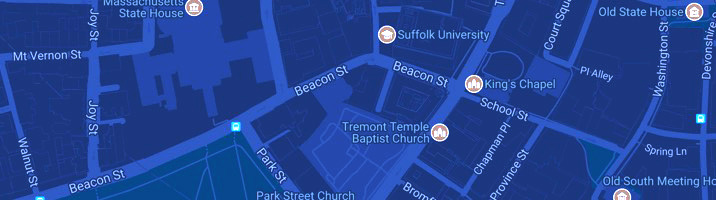


The stately 11-story Paddock Building at 101 Tremont Street has seen its share of Boston’s history over the past 125 years, but it reopens this academic year with a new mission: to welcome Suffolk students home to a residential community located in the center of the University’s campus and the city’s downtown neighborhood.
The 88,000-square-foot building becomes the University’s sixth residence hall, and will eventually house 280 students. Most recognizable as the home of the popular Beantown Pub, 101 Tremont stands directly across the street from the historic Granary Burying Ground on Boston’s Freedom Trail where millions of pedestrians pass each year, along with duck boats full of tourists and the occasional championship parade. It offers students unparalleled access to the city, an essential part of the Suffolk experience.

Transforming the venerable building into a residence hall allows the University to move towards its goal of giving all students who want to live on campus a chance to do so, says Suffolk University President Marisa Kelly.
The multiyear process of purchasing and transforming an outdated office building into state-of-the-art student housing was also fueled by the University’s commitment to experience-based and immersive learning in the city.

“Our students get so much out of what happens in our classrooms and their engagement with our faculty and staff,” President Kelly says. “But the city is also really central to a Suffolk educational experience. I am confident that ten years from now we will look back on the purchase of this building as pivotal to solidifying Suffolk’s footprint in downtown Boston and our reputation as a place where learning is engaging and powerful.”
The two-year renovation has successfully maintained the building’s historic character—including original marble-floor stairwells and wrought iron railings—while thoroughly upgrading its accessibility and utility systems. The sleek second-floor student lounge is ready and wired for high-tech meetups and group project pitch sessions, while also possessing a postcard-worthy view of the historic Granary Burying Ground.

The new residence hall opens at a singular time, with innovation and history juxtaposed on a daily basis. They include Suffolk’s brand-new Welcome Center, as well as new honors program facilities and a completely revamped on-campus dining hall. One block away from 101 Tremont, the Holocaust Museum Boston is nearing completion and is expected to draw visitors from across the globe.
Creating space for more Rams to live and learn matches downtown Boston’s broader shift toward housing and activity in the city center, with people living where they work, socialize, and shop, says Downtown Boston Alliance President Michael Nichols.

After years of post-pandemic sluggishness, there are now more than 20 pending projects converting underused office or commercial space to residential use in the immediate downtown neighborhood.
“Suffolk is walking that walk in a way that we’re really excited about and is joined by a great number of projects that are seeking to do the same thing,” he says. He sees Suffolk as a particularly important anchor in downtown Boston’s story. “It’s been great to have Suffolk as a constant, and now a growing force, for what’s good about downtown. The students bring an amazing energy here.”

Contact
Greg Gatlin
Office of Public Affairs
617-573-8428
Erica Noonan
Office of Public Affairs
774-286-9528