


New England Experiential Conference
New England Experiential Conference (NEEC):
Building on Our Strengths, Evolving for Tomorrow
November 12 (evening reception) – 13 (conference), 2026
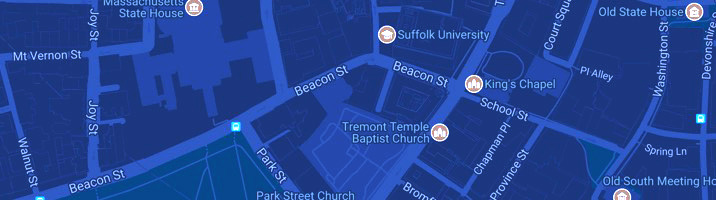
Suffolk University Law School, Boston, MA
Book Your Hotel Room
We’ve reserved a limited block of discounted hotel rooms for conference guests. To take advantage of the special group rate, please make your reservation using the conference hotel booking links below.
Revere Hotel
Please note: The Revere Hotel room block is available through Thursday, October 15, 2026. After this date, the booking link will no longer be active, and the discounted conference rate will no longer be available through the room block.The Bostonian
Please note: The Bostonian Hotel room block is available through Tuesday, October 13, 2026. After this date, the booking link will no longer be active, and the discounted conference rate will no longer be available through the room block.We encourage you to book your room early, as availability within the room block is limited and the cutoff dates are fast approaching.
This year’s conference theme centers on the enduring strengths of experiential education as a foundation for preparing students to meet evolving challenges of clients and communities by integrating new resources in an ever-changing profession.
Rapid advances in artificial intelligence, changes in the delivery of legal services, the implementation of the NextGen Bar Exam, and broader developments in higher education are transforming expectations about how lawyers are trained, assessed, and prepared for practice. Notably, many of the competencies emphasized by the NextGen Bar Exam, including problem-solving, client-centeredness, professional judgment, and integrated legal analysis, have long been hallmarks of experiential education.
At the same time, legal educators and the profession face pressing societal challenges. Persistent barriers to justice, increasing polarization, threats to the rule of law, and attacks on academic freedom raise fundamental questions about the role of lawyers and legal education in a democratic society. Moreover, these challenges often fall most heavily on underserved communities, deepening inequities and creating new obstacles to meaningful access to justice.
Experiential education is uniquely positioned to respond to these developments. Through clinics, externships, simulations, and other experiential learning opportunities, students engage directly with clients, communities, institutions, and real-world legal problems. They practice pivoting during unexpected changes, confronting asymmetrical power distribution, solving complex problems with multiple stakeholders, and centering clients at each juncture of representation. In doing so, students can develop the skills, values, adaptability, and professional identity needed not only to succeed in an evolving profession but also to serve effectively and ethically in a rapidly changing world.
This conference will explore two interconnected themes: 1) the future of experiential legal education and practice, including how artificial intelligence and other technologies, the NextGen Bar Exam, and other emerging developments are reshaping the legal profession and our pedagogy; 2) the role of legal education and the profession in promoting justice, strengthening democracy, advancing the rule of law, and fostering meaningful community engagement.
Throughout these conversations, participants will consider how experiential education can remain grounded in its core commitments while continuing to innovate, adapt, and benefit society.
Agenda/Schedule will be posted soon.
This NEEC is made possible in part through the support of the AALS Section on Clinical Legal Education.